Hope and Healing

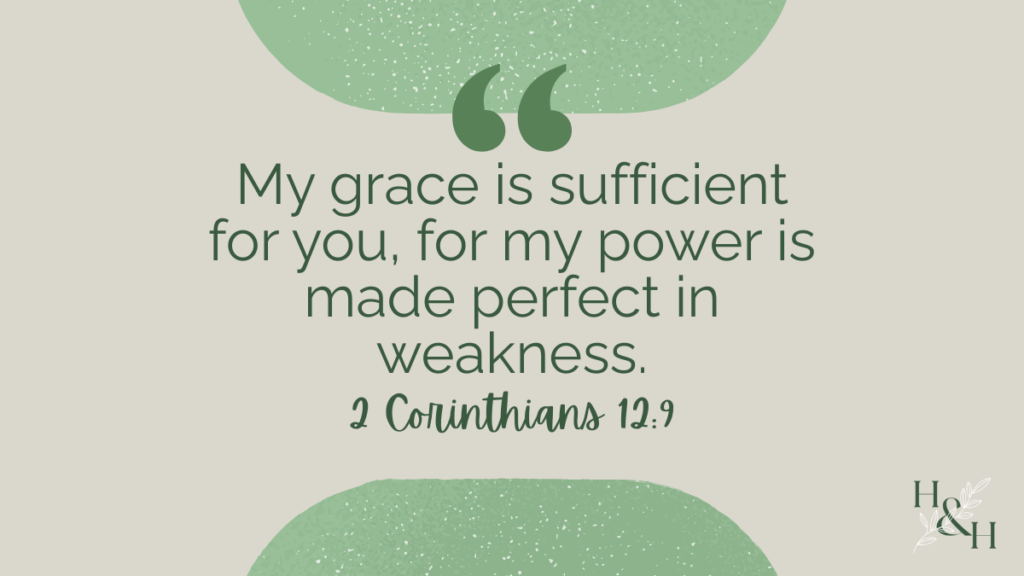
When God's Grace Met Me in the Wreckage: A Testimony of Trauma and Sufficient Grace: “My grace is sufficient for you, for my power is made perfect in weakness.” – 2 Corinthians 12:9

When God's Grace Met Me in the Wreckage: A Testimony of Trauma and Sufficient Grace

The car seat was empty.

That was my first conscious thought as awareness returned in fragments, not a cry for my own survival, but a desperate, silent pleading for my children. Where were they? Were they safe? In the violent stillness after the head-on collision, as I drifted above my shattered body, my spirit did not beg for its own life. It begged for theirs.

What happened next defies the limits of human language. I have spent thirty years reaching for words adequate to the reality I encountered, and I am still reaching.

I was enveloped by a Presence. Not a light, though there was light. Not a feeling, though peace saturated every molecule of my being. This was a Person, a Love so complete, so utterly without condition or demand, that I understood in an instant that this was the foundation upon which all of reality rests. This was home. This was the God I had sung about in wooden pews, now closer than my own breath.

And then, gently, without coercion or condemnation, I was given a choice: Stay, or return?

I thought of my children’s small hands. I chose to return.

The Greater Trial: Living After the Miracle

I returned not to strength or peace, but to a broken body in a hospital bed. I returned to surgeons who could not promise restoration and therapists who could not predict progress. I returned to a husband whose eyes held both relief and grief, and to children who did not understand why their mother could no longer hold them.

The woman they had known, capable, energetic, present, was now a trauma patient defined by what she could no longer do.

In the months and years that followed, I discovered a painful truth that no one had prepared me for: surviving the accident was not the greatest trial I would face. The greater trial was living after the miracle.

I had encountered the unconditional love of God. I had felt His presence as tangibly as I had ever felt anything. And now, in the long, grinding work of recovery, He seemed utterly silent. The God who had held me in the wreckage now felt distant, even absent.

I cried out the words of the psalmist: “My God, my God, why have you forsaken me?” (Psalm 22:1, NIV). The heavens remained quiet. The pain continued. The question echoed without answer.

The Thorn That Remained

I understood, perhaps for the first time, the apostle Paul’s anguish when he pleaded with the Lord to remove the thorn from his flesh. Three times he begged. Three times he received not the removal he requested, but something far more difficult to receive:

“My grace is sufficient for you, for my power is made perfect in weakness.” (2 Corinthians 12:9, NIV)

I had read this verse hundreds of times. I had heard sermons on it, underlined it in my Bible, nodded along with teachers who extolled the sufficiency of God’s grace. But lying in that hospital bed, unable to move, unable to mother, unable to find my way back to the person I had been, I realized I had never truly believed it.

I had believed that grace was a consolation prize, God’s gentle way of saying no to my desperate pleas for healing. I had believed that Paul’s thorn was a burden he learned to tolerate, not a gift he learned to treasure. I had believed that weakness was an obstacle to be overcome, not a dwelling place for the power of Christ.

I was wrong.

Paul was not being denied. He was being given something far greater than the removal of his affliction. He was being given God Himself, not as a solution to suffering, but as a companion within it. His grace was not a substitute for human strength. It was the revelation that human strength had never been the point.

Mothering from a Place of Weakness

My children became my unintended theologians.

In my weakness, I could not offer them the energetic mothering I had once provided. I could not chase them through the park or carry them to bed. I could not attend school performances or prepare elaborate meals. By every measurable standard, I was failing them.

What I could offer was my presence. My willingness to listen. My tears, which taught them that grown-ups also feel afraid. My small, hard-won victories, which showed them that healing is not a destination but a daily practice of receiving grace.

One afternoon, my young son climbed onto the chair beside my hospital bed. He did not ask to be held; he had already learned that I could not hold him. Instead, he simply laid his small, warm hand on my bandaged arm and rested his head against my shoulder.

He did not need me to be strong. He did not need me to have answers, or even words. He needed me to be there, present, breathing the same air, inhabiting the same room, offering the only thing I had left to give.

In that moment, Paul’s words became not doctrine but oxygen:

“Therefore I will boast all the more gladly about my weaknesses, so that Christ’s power may rest on me.” (2 Corinthians 12:9, NIV)

I was not a failure. I was a vessel, cracked, leaking, entirely insufficient by every earthly measure. And yet, Christ’s power was resting on me, manifesting not in dramatic healing but in the quiet, sustaining grace to simply be present with the people He had given me to love.

The Gift Hidden in the Wreckage

It took me decades to recognize the gift hidden in my wreckage.

I had searched for it everywhere, in theological frameworks that promised to explain suffering, in healing testimonies that guaranteed deliverance, in the relentless pursuit of the person I had been before the accident. I wanted God to restore my old life, my old identity, my old capacity for faith without doubt.

But God was not in the business of restoration. He was in the business of resurrection.

Restoration returns us to what we were. Resurrection makes us new.

“Therefore, if anyone is in Christ, the new creation has come: The old has gone, the new is here!” (2 Corinthians 5:17, NIV). I had always applied this verse to conversion, to the moment of salvation that begins the Christian life. I had not understood that resurrection is not a single event but an ongoing process, that God is continually making all things new, including our broken bodies, our fractured identities, our shattered faith.

The gift was not the accident. The gift was not the suffering. The gift was the new creation that God was patiently, lovingly assembling from the rubble of my old life.

A Word for Those Still in the Wreckage

If you are reading this and your own life lies in pieces around you, I want to speak directly to your heart.

God is not silent in your suffering. He is present within it, not as a problem-solver who owes you explanations, but as a fellow sufferer who has already walked through death and out the other side. His grace is not a theory to believe but a Person to receive. His power is not revealed in the absence of your weakness but in the fullness of it.

You do not need to muster stronger faith. You do not need to discover the hidden purpose in your pain. You do not need to hurry your healing along or perform your grief in ways that make others comfortable.

You need only to remain in relationship with the God who has already remained with you.

“For I am convinced that neither death nor life, neither angels nor demons, neither the present nor the future, nor any powers, neither height nor depth, nor anything else in all creation, will be able to separate us from the love of God that is in Christ Jesus our Lord.” (Romans 8:38–39, NIV)

This is the sufficiency I finally understood. Not that my suffering would be removed, but that God’s love would remain. Not that I would be restored to who I was, but that I would be raised as someone new.

The wreckage was not the end of my story. It was the doorway into a life I could never have imagined, a life marked not by the absence of pain, but by the presence of a grace that is, against all odds, sufficient for each day.

His grace is sufficient for you, too.

Author Bio:

Lorraine Kane is the author of A Gift in the Wreckage: A True Near-Death Experience Memoir, a testimony of surviving catastrophic trauma, encountering God’s unconditional love, and the decades-long journey of discovering that His grace is made perfect in weakness. She is the founder of RiverView Wellness, where she companions others navigating their own seasons of suffering and spiritual reconstruction. Lorraine lives with her family and continues to learn, daily, that resurrection is not a single event but an ongoing gift.

Connect with Lorraine: 

This article is part of our Guest Testimony Series on Hope and Healing, where believers share their journeys of redemption, transformation, and faith in Jesus Christ.

Would you like to share your own testimony to encourage others? We’d love to hear from you! Submit your story here and let your journey be a light to someone still searching for hope.

Related Posts

A Testimony of Trauma and Sufficient Grace

What Obedience Looks Like at Home

The Day God Gave Me a “Second Birthday”

Connect with Us

Follow Us

Prayer Requests

Should you require prayer, kindly send your prayer request to prayers@hopeandhealing.co.za

Testimonies

Should you want to share a testimony, kindly send your testimony to testimonies@hopeandhealing.co.za

General Enquiries

For any general enquiries, kindly send an email to info@hopeandhealing.co.za